King Arthur, Servus Dei
Arthur as the sixth century might have known him: a dux bellorum of the Britons, raised in secret, crowned at Camelot, and fighting the twelve battles that the oldest Welsh chronicle ascribes to him. This page gathers the reference material for the series: how to say the Welsh names, who everyone is, and where each of the Odes stands in the historical record.
Release schedule
The four books come out one a week, on Sundays, on Amazon.
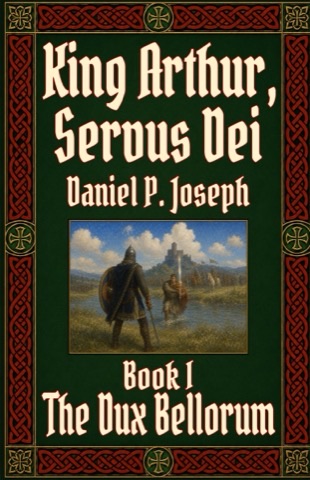 Book One: The Dux BellorumOn sale nowBuy on Amazon
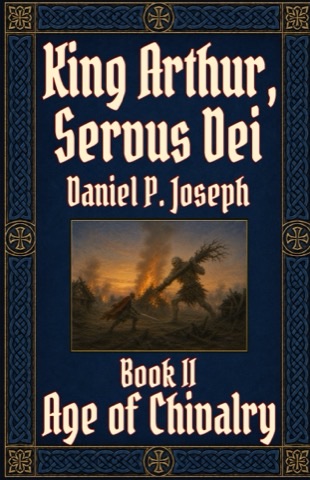 Book Two: Age of ChivalryOn sale nowBuy on Amazon
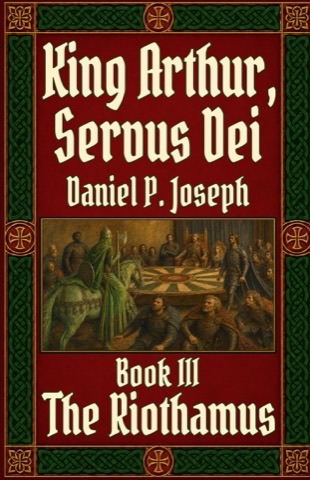 Book Three: The RiothamusSunday, October 18
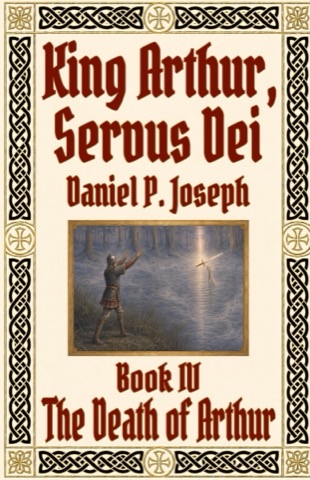 Book Four: The Death of ArthurSunday, October 25
On Sunday, October 4, at 1 p.m. Eastern, Daniel presents the epilogue of Book One in a launch video on Historia Ecclesiastica.
The Odes and the Twelve Battles
The Odes follow the oldest surviving list of Arthur’s battles, set down in the Historia Brittonum, a Welsh chronicle of about the year 830 attributed to the monk Nennius. That chronicle names twelve battles fought by Arthur as dux bellorum, the leader of battles, against the Angles, Saxons, Jutes and Picts. All twelve are told across the four books: the first eight in The Dux Bellorum, the ninth in Age of Chivalry, the tenth and eleventh in The Riothamus, and the twelfth, Mount Badon, in The Death of Arthur. A Final Ode, belonging to no chronicle, closes the cycle.
- The First Ode. The Battle of the River Glein, against Ida of Bernicia
- Nennius places this first, at the mouth of a river called Glein. Fought one year after Arthur's coronation.
- The Second Ode. The First Battle of the River Dubglas, against Critta of Lindsey
- Nennius counts four battles on the Dubglas in the region he calls Linnuis, which this book takes to be Lindsey.
- The Third Ode. The Second Battle of the River Dubglas, against Critta of Lindsey once more
- The Fourth Ode. The Third Battle of the River Dubglas, against Mercia
- The Fifth Ode. The Fourth Battle of the River Dubglas, against the Gewisse
- The Sixth Ode. The Battle of the River Bassus, against the Picts
- Nennius names this the sixth battle, on a river he calls Bassas.
- The Seventh Ode. The Battle of Cat Coit Celidon, by which Pellinore's loyalty was tested
- The name is Welsh for the battle of the Caledonian Wood.
- The Eighth Ode. The Battle of Guinnion, against the Jutes
- Nennius sets this at a stronghold he calls Castellum Guinnion, where Arthur carried an image of the Blessed Virgin upon his shoulders.
- The Ninth Ode. The Battle of the City of the Legion, against the Northumbrian-Berenian alliance
- Nennius names the ninth battle in urbe Legionis, the city of the legion, usually taken to be Caerleon or Chester. In Age of Chivalry.
- The Tenth Ode. At the River Tribruit, against the Irish
- Nennius sets the tenth in litore fluminis quod vocatur Tribruit, on the shore of the river called Tribruit, a place never since identified. In The Riothamus.
- The Eleventh Ode. The Battle of Agned, against Essex
- Nennius gives the eleventh on a hill he calls Mount Agned, which some manuscripts name Breguoin instead. In The Riothamus.
- The Twelfth Ode. The Battle of Badon, against the great Anglo-Saxon alliance
- The last and greatest of the twelve, and the only one attested outside Nennius: Gildas, writing closer to the event than any other witness, calls it the siege of Badon Hill and says the Saxon advance was halted there. In The Death of Arthur.
- The Final Ode. The Battle of Camelot
- This one belongs to no chronicle. It closes the cycle in The Death of Arthur.
- An Interlude. Sir Erec Against Sir Meleagant's Giant
- Set as verse in Age of Chivalry, but telling no battle of Nennius's twelve — it follows the Dread Wulf of the Marsh to the ruined city of Atrebates.
The four battles still to come are fought at the City of the Legion, the river Tribruit, Mount Agned, and finally Mount Badon, where Arthur’s victory broke the Saxon advance for a generation.
A Glossary of Names, Places, and Terms
Pronunciations are given for the names most likely to stop a reader. They follow modern Welsh where the name is Welsh: dd is pronounced like the th in “this”, ll is a breathy hl with no English equivalent, w is a vowel sounded like oo, and f is sounded like v.
- Abbey of the Glassy Isle
- Britain's finest convent, built by Bishop Alexander, whose choir of nuns raised Sir Galahad. Abbess Elaine, who loved him as her own, has spent fifty-six years there in the ministry of prayer.
- Adda(AH-tha)
- Prince of Bernicia, son of King Ida.
- Aelwyn(AIL-win)
- Lady Aelwyn, wife of Sir Ector and foster mother of Arthur.
- Aengus(ENG-us)
- King of Cashel in Ireland and father of the princess Isolde.
- Aglovale(AG-lo-vale)
- Eldest son of King Pellinore of Listenois, and father of Sir Morien.
- Agravain(AG-ra-vayn)
- Second-born son of Lot and Morgause. Merlin requires of him a vow to be remembered as the least of his brothers, famed only for his association with Gawain.
- Alcolon(AL-ko-lon)
- One of the two druids closest to Morgause in her old age, with Klingsor; he works her curses and later carries Mordred's orders.
- Alexander
- Bishop of Camelot, once a young priest under Bishop Adelfius, who crowns and counsels Arthur.
- Alfred
- King of Wessex some three hundred years after Arthur, driven by the Vikings to rule from a swamp, who goes seeking the old tales of Camelot.
- Ambrosius Aurelianus(am-BRO-zhus aw-ray-lee-AH-nus)
- A Romano-British commander named by the historian Gildas as the leader who rallied the Britons against the Saxons. Discussed in the Epilogue.
- Andrivete(an-DRIV-et)
- The wife of Sir Kay, mother of his sons Garanwyn and Gronosis and his daughter Kelemon. Not even she suspects the shame her husband daily bears.
- anfac(AN-fak)
- A river monster the size of a man, shaped like a beaver, with the teeth of a shark and the venom of a basilisk. They are dam-builders and hunters who fancy the taste of men.
- Annowre(a-NOW-ruh)
- A young red-haired witch trained by Morgause, named her new druidess-companion and set in command of the Orknean force at Tintagel.
- Appian Gate(AP-ee-an)
- Rome's gate onto its greatest southward road, assaulted by Sir Bedivere with siege ladders and battering rams to draw the Byzantine guard south. Also called the Porta Appia.
- Arawn(AR-own)
- The pagan god to whom Incobius and the Order of the Dragon are consecrated, and whose name the druids chant over the bog of Enys Gwair.
- Arianrhod(ar-ee-AN-hrod)
- A moon goddess whose temple once stood on the ground where Bishop Alexander built the Abbey of the Glassy Isle.
- Arondite(AR-on-dite)
- Lancelot's sword.
- Atrebates(a-TREB-a-teez)
- A marshy earldom south of Estregales under Lord Niwl, paying tribute to Dumnonia. It lies along the Saxon frontier.
- Avalon
- The Isle of Avalon, the hidden island of the Lady of the Lake, where Excalibur is given.
- Badon
- Mount Badon, the last and greatest of Arthur's twelve battles, still to come in this cycle.
- Balinor(BAL-in-or)
- An ancient sorcerer among the Dragon Lords who founded the Order of the Dragon. He united the six bogs of Britain with the blood of twelve virgins, making the sixth a portal into the Rivers of Time.
- Ban
- Sir Ban of Icenorum, captain of the Camelot Guard.
- basilisk
- A fifteen-foot serpent of the Winterswylt with glowing yellow eyes and venomous fangs, one of the forest's undying beasts. It cannot be killed, only stunned, and heals stronger after a century of sleep.
- Bedivere(BED-i-veer)
- Arthur's chief minister, son of Corneus.
- Bendegron(ben-DEG-ron)
- A giant named among the pagan gods of the giants, risen from the sea to destroy the towers of Dol. Arthur sails to Brittany to face him.
- Beren(BEH-ren)
- A northern British kingdom, ruled by King Rience and later by Queen Britomart.
- Bernicia(ber-NISH-a)
- The Anglian kingdom north of the Humber, ruled by Ida and then by his son Adda.
- Bertilak(BER-ti-lak)
- Pictish chieftain and duwrig of the god Cernunnos, and the closest friend of King Pelles. He shares Pelles's curse of immortality and a crooked back, and his skin, hair, and eyes remain bright green.
- Lady Bertilak
- The golden-haired lady of Hautdesert, who tests Gawain's chastity across the Christmas octave. She is the lord's sister, not his wife, and her brother was an earlier victim of the Green Knight's game.
- Binding Book
- An empty leather manuscript figured with a rayed sun, given to Mordred as a boy, whose pages fill of themselves with writing in Old Brittonic.
- Blemmyia(BLEM-ee-a)
- A desert kingdom far up the Nile, the realm of Sir Morien's mother. Its court is guarded by warriors with the heads of beasts and speaks a desert form of Greek.
- Boann(BOO-an)
- A river goddess from whom, Morgause claims, the anfacs draw their life.
- Boar of the Sea
- The Dumnonian vessel that carries Arthur to Brittany, chosen not for comfort but for speed.
- The Boar of the Sea
- The ship Arthur sailed in his campaign against Rome, and the flagship of his fleet again in his final voyage.
- Breuse(BROOZ)
- A mercenary knight who rises in Queen Britomart's court, three-times-great-nephew of the Vortigern of Arthur's grandfather's days. He spreads pagan depravity wherever he quests in the north.
- Breuse and Cadrawd(BROOZ, KAD-rowd)
- Two traitorous Brits who fight with the Anglo-Saxon host at Badon: Sir Breuse, a distant relative of Vortigern, and Lord Cadrawd, the robber duke once convicted of scheming with Queen Britomart.
- Brigantia(bri-GAN-tee-a)
- The mother goddess of the north, served in Trawsfynydd by tower-bound vestal virgins sworn to seventeen vows and forbidden their own eyes.
- Broceliande(bro-sel-ee-AHND)
- The enchanted forest of Brittany, in Gaul across the sea.
- Brunor(BROO-nor)
- Brunor the Black, a knight of Caerleon of the house of Pedrawd, hardened by a thousand frontier battles and a close friend of Sir Brandiles.
- Cadrawd(KAD-rowd)
- A Christian duke of Beren under Uther whose piety has since grown cold, and the most trusted adviser of Queen Britomart.
- Caer Estregal(kire ES-treh-gal)
- King Lac's castle, governing the southern reaches of Estregales, while Rydmor's Keep watches the north for Saxon raids.
- Caerfyrddin(kire-VUR-thin)
- The hills of Merlin's birth, in what is now Carmarthen in south Wales.
- Caerleon(kar-LEE-on)
- A British kingdom and city on the river Usk, one of the old Roman legionary fortresses.
- Caerwyn(KIRE-win)
- Sir Geraint's mare, who fights at his side against the guardians of Dyfed.
- Calogrenant(ka-LOG-re-nant)
- Elder cousin and boyhood companion of Yvain, raised to the Round Table in Sir Ban's place and slain by the Red Knight.
- Cameliard(KAM-el-yard)
- The kingdom of King Leodegrance, and the home of Guinevere.
- Camelot
- Arthur's city and the seat of the High King, set upon its hill; in this book a walled city with a cathedral, built among the works the Romans left.
- Camelot Guard
- Arthur's standing company of a thousand men, drawn from the landed farmers of Britain, who sell their lands to the poor and receive land near Camelot in exchange for a vow to be ready at the king's call.
- Camlann(KAM-lan)
- The battle, still far off, in which Arthur is said to have fallen.
- carnyx(KAR-niks)
- A bronze war horn shaped like a boar, carried into battle long ago by druidic warriors who offered their dead to the gods.
- Cashel(KASH-el)
- An Irish fortress-kingdom, called Cashel's Rock, ruled by King Aengus and home to the princess Isolde.
- Castle of Gannes(GAN)
- The fortress of the Distant Isles, held by King Nestor and his son Sir Bleoberis, besieged for thirty days by an army of rotting warriors.
- Castle of Marvels
- The seat of King Pellinore in Listenois, left in Prince Aglovale's charge while his father hunts the questing beast.
- Cat Coit Celidon(kat koyt KEL-i-don)
- Welsh for "the battle of the Caledonian Wood", the seventh of Arthur's battles.
- Cath Palug(kath PAH-leeg)
- A monstrous cat of Welsh legend, in this book the beast of the caverns faced by Arthur and Lancelot.
- Cator(KAY-tor)
- Sir Cator of Kambernic, the elderly first minister of Cornwall and lifelong friend of King Mark, once the strongest knight in that realm.
- the centaur
- An ancient half-man, half-horse of the Winterswylt, said to have guarded the wood long before the Rangers. His appearance tells them when and where Merlin's quest will need their aid.
- Cernunnos(ker-NOO-nos)
- The horned green god of the wilderness, adored of old upon the mount of Hautdesert. He feeds not on blood but on a doomed soul's year-long fear of death.
- Christmas Novena
- The nine days of fasting, penance, and sung odes leading to the Feast of the Nativity, beginning on the seventeenth of December.
- Cissa(KISS-a)
- King of Sussex, who sues for a lasting peace with Estregales and disbands his raiding parties.
- City of the Legion
- An old northern fortress built against Hadrian's Wall, seized by Æthelric and his allies from Beren, and the site of a great battle of Arthur's twenty-eighth year.
- Clarent(KLAR-ent)
- Uther's sword, driven into the Stone of Destiny and drawn from it by Arthur.
- Columba
- Irish abbot and founder of the monastery of Enys Gwair, which he settled with twelve companions. Arthur calls him a living saint.
- Compline(KOM-plin)
- The Church's night prayer, the last of the hours of the Divine Office, said before sleep.
- Constantine
- Two men bear this name: the first Pendragon king, Uther's father; and the Roman emperor acclaimed at York, discussed in the Epilogue.
- Corbenic(KOR-ben-ik)
- The castle of King Pelles, once the jewel of the Western Sea until an earthquake took it from the earth. It stands now within the Rivers of Time, where the Holy Grail is kept.
- Cortain(KOR-tayn)
- Sir Tristan's sword, ancient and partly fractured.
- Council of Wales
- The council of the western realms founded by Arthur at Caerfyrddin, meeting three times a year under the head elder and the new bishop, with legates from Orkney, Cornwall and the Distant Isles.
- Critta(KRIT-a)
- King of Lindsey, the Anglian adversary of the Second and Third Odes.
- crozier(KRO-zher)
- A bishop's staff, shaped like a shepherd's crook.
- crug(kreeg)
- A Welsh word for a mound or hill, here a pagan holy place raised over the dead.
- Diarmait mac Cerbaill(DEER-mit mak KER-vil)
- The Irish King of Tara, whose eastward fortress of Dun Etair sends out the pirate-slavers who raid Britain's western shore.
- Dodinas(DOD-i-nas)
- A knight of Orkney and that kingdom's legate upon the Council of Wales.
- Dol(DOLE)
- The royal city of Brittany, seat of King Hoel, with a cathedral and a citadel on the bluff of Mount Saint Michael.
- Dolorous Gard(DOL-or-us GARD)
- "The Sorrowful Keep", the fortress held by Sir Tarquin; known in older tales as Joyous Gard once it is won.
- Dornar(DOR-nar)
- A son of King Pellinore and a knight of the Round Table, brother to Aglovale, Lamorak and Tor.
- Dragon Crown
- The crown of the High King of Britain, worn by the Pendragon.
- Dragon Lords
- The ancient sorcerers who summoned and rode dragons and ruled the fourteen realms before the light of Christ came to Britain.
- Dread Wulf(dred WOOLF)
- The name Saxon raiders gave Sir Erec, whose true name they did not know. It was set upon his crest with a fanged wolf and the words the Saxons cried.
- Drostan(DROS-tan)
- A former Pict, priest of Orkney, who preached in secret there for a year and was baptized with the name John. Merlin later urges the canons of Camelot to elect him bishop after Alexander's death.
- Dubglas(DOOB-glas)
- The river of the second through fifth battles, in the region Nennius calls Linnuis.
- Dumnonia(dum-NOH-nee-a)
- The British kingdom of the south-west, around modern Devon and Cornwall.
- Dun Etair(doon EH-tar)
- The Irish coastal fortress from which King Diarmait's slave-raiders sail, ravaged by Arthur's Camelot Guard.
- Durnovaria(dur-no-VAR-ee-a)
- Southern town with an abbey and cathedral, where the Mass of Christ, Rex Gentium was sung before the fleet sailed.
- duwrig(DOO-rig)
- A druid who makes himself the mortal seat and vessel of one of the old gods, taking that god's name and ruling inseparably alongside it. Both Vortigern and the Pict Bertilak are named by this title.
- dux bellorum(dooks bel-LOR-um)
- Latin for "leader of battles", the title the Historia Brittonum gives to Arthur. He is a war leader set over kings, not a king himself.
- Einion and Ryderch(EYE-nyon, RID-erkh)
- The two young squires of Sir Erec, trained and equipped by him from childhood, who ride with him on his final quest.
- Elaine(e-LAYN)
- Daughter of Igraine, sister of Morgana and Morgause, a nun and later abbess of the Abbey of the Glassy Isle.
- elyons(EL-ee-ons)
- The spirits said by the country people to dwell in the Elyonwood.
- Elyonwood
- The great forest east of Camelot, where Merlin keeps his hermitage and where Arthur is raised.
- Enide(EN-id)
- A young woman of Atrebates who binds Sir Erec's broken arm after his battle in her home and attends him at the castle of Dumnonia.
- Enys Gwair(EN-is GWIRE)
- An island of the frozen northern seas, in Welsh tradition a place of imprisonment.
- Erec(EH-rek)
- Knight of Estregales, nephew and adopted son of King Lac, known to his foes as the Dread Wulf of the Marsh. His courage in battle conceals a heart daily racked with fear.
- Estregales(es-tre-GAL-es)
- A British kingdom, ruled by King Lac.
- Euddogwy(ay-THOG-wee)
- Bishop of Llandaff, in the second year of his reign, who imprisons Yvain for desecrating his cathedral and sentences him to a life of exile.
- Excalibur(ex-KAL-i-bur)
- The sword given to Arthur at Avalon, called the sword of David.
- Fay
- The pale, half-blind old woman at Lord Bertilak's table, who guides Gawain to the Green Chapel. She is Morgana.
- Fflamddwyn(FLAM-thwin)
- Welsh for "Flame-Bearer", the jouster of Hallam.
- Fisher King
- The title of King Pelles in his penance, guardian of the Grail at Corbenic until a truly holy man should find it.
- Gaheris(GAH-er-is)
- Third son of Lot and Morgause, who grinds his amulet of the healing god Nudd into the snow before his baptism. He climbs Mount Agned at Arthur's side and is wounded there.
- Galahad
- The youngest of the three Grail questers, raised from infancy by the nuns of the Abbey of the Glassy Isle. Of the three, he alone is judged wholly pure of heart.
- Galatine(GAL-a-teen)
- The sword of King Gorlois, which nearly took Uther's life and which Gawain inherits as his true-wise heir. In the realm beneath the bog it blazes as a sword of light inscribed Verbum caro factum est.
- Garanwyn and Gronosis(ga-RAN-win, gro-NO-sis)
- The two sons of Sir Kay and Lady Andrivete, and Arthur's nephews, mentored by Lancelot and enrolled late in life upon the twenty-ninth and thirtieth chairs of the Round Table.
- Gareth
- Youngest son of Lot and Morgause, knighted by his mother before he had earned it. He wore a secret amulet to Lug, the so-called god of victory, until Merlin made him stomp it into the snow.
- Gaudete Sunday(gow-DAY-tay)
- The third Sunday of Advent, a day of rejoicing amid the fast, on which Yvain rode into the festivities of Llandaff.
- Gawain(GAH-wayn)
- Eldest son of King Lot and Queen Morgause, who flees Orkney, is baptized by Merlin's hand, and takes Sir Kay's seat at the Round Table. Renamed by Merlin a son of the Five Precious Wounds of Christ, he later earns the title Liberator of the North.
- Gewisse(GEV-is-eh)
- The West Saxon people of the upper Thames, adversaries of the Fifth Ode.
- Gildas(GIL-das)
- A British monk of the sixth century whose On the Ruin of Britain is the earliest account of the Saxon wars. Discussed in the Epilogue.
- Gingalain(GING-ga-layn)
- Son of Sir Gawain and Lady Ragnelle, and Mordred's closest friend at Camelot's cathedral school.
- the Glassy Isle
- The most heavenly convent in Britain, home of the Reverend Abbess Elaine, where Merlin takes Vivian to make her vows.
- Glastonbury Abbey
- The monastery guarding the shrine and true tomb of St. Joseph of Arimathea, ruled by Abbot Illtud. For centuries the Grail was in its keeping.
- Gododdin(go-DOTH-in)
- The British kingdom of the north, around modern Edinburgh, and the name of an early Welsh poem that mentions Arthur.
- Gorlois(GOR-loys)
- King of Cornwall, first husband of Igraine, father of Morgana, Morgause and Elaine.
- the Green Chapel
- The place appointed for the Green Knight's return blow, which proves to be the wooden chapel of Hautdesert itself, overrun with vines, moss and weeds on New Year's Day.
- the green girdle
- A belt of moss-green with a golden buckle, pressed on Gawain by Lady Bertilak with the promise that its wearer cannot be harmed. It was only a test, and Gawain afterward wears it as a badge of his weakness.
- the Green Knight
- A huge knight whose flesh, beard, horse and armour are all green, who rides into Camelot on the octave of Christmas to offer the game of a blow for a blow. He is Lord Bertilak while Cernunnos possesses him.
- green martyrs
- Those who die to self and live for God alone in the desert or the woods, their deeds known only to Him.
- Gringolet(GRING-o-let)
- Gawain's stallion, a foal of Arthur's mare Llamrei, given him by Sir Lancelot without the king's leave.
- Guinevere(GWIN-e-veer)
- Daughter of King Leodegrance of Cameliard, and Arthur's queen.
- Guinnion(GWIN-ee-on)
- The stronghold of the eighth battle, where Arthur bore the image of the Blessed Virgin.
- Guthrum(GUTH-rum)
- The Viking king who takes the castle of Chippenham and drives Alfred into the western marshes.
- Hafren(HAV-ren)
- A river goddess of the old religion, said to aid any man who casts her a bit of silver.
- Hautdesert(hoh-de-ZERT)
- Lord Bertilak's castle on an island in the black northern sea beyond Hadrian's Wall, chartered by Uther as the foothold for a campaign into the north. It fades into the mist at its lord's death.
- Hengist(HENG-gist)
- The Jutish chieftain invited into Britain by Vortigern, and the father of the Saxon settlement.
- Hengroen(HENG-royn)
- Arthur's warhorse in his later years, taken up after the death of Llamrei.
- hermitage
- The dwelling of a hermit, a Christian who withdraws to live alone in prayer.
- Historia Brittonum(his-TOR-ee-a bri-TON-um)
- "The History of the Britons", the Welsh chronicle of about 830 that lists Arthur's twelve battles.
- Hoel(HO-el)
- King of Brittany, ruling from the Castle of Dol. He is a son of Queen Igraine's sister, and so Arthur's cousin.
- Holy Grail
- The chalice of Christ, in which the Arimathean caught the droplets of the Passion and which he carried to Britain. The Order of the Dragon seeks to desecrate it and so release a thousand dragons.
- Icenorum(ik-en-OR-um)
- The eastern British territory of Sir Ban, from the Roman name for the land of the Iceni.
- Ida(EE-da)
- King of Bernicia, Arthur's first and longest-lived Anglian adversary.
- Igraine(ee-GRAYN)
- Wife of Gorlois and afterwards of Uther; mother of Morgana, Morgause, Elaine, and of Arthur.
- Illtud(ILL-tid)
- Abbot of Glastonbury Abbey and, after Merlin, reckoned the wisest man in Britain. He was a mentor to Percival in his youth and sets the Grail questers on their way.
- Isolde(ih-ZOLD)
- Princess of the Rock of Cashel in Ireland, famed among merchants for her beauty. King Mark of Cornwall sues for her hand, and Sir Tristan is sent to bring her home.
- Ithel(ITH-el)
- Head elder of Caerfyrddin, and something like the great-great-great-great nephew of Merlin, whom he strongly resembles in old age.
- Bishop John
- Bishop of Camelot after the death of Bishop Alexander, and the master who instructs Mordred in the catechism daily in his private study from the age of four.
- Joseph of Arimathea
- The uncle of the Lord and apostle of Britain, who carried Christ's chalice to the island. His incorrupt body lies in a hidden chapel beneath Glastonbury Abbey.
- Joyous Gard
- Lancelot's crumbling castle upon the Bernician shore, won from Octa the Dragon King and renamed by Lancelot from Dolorous Gard.
- Kahedin(KA-heh-din)
- Prince of Cashel, son of King Aengus, who brings eight boats and three hundred Irish warriors to Arthur's Roman campaign and afterward delivers Arthur's tithe to the pope-elect.
- Laetare Sunday(lay-TAR-ay)
- The fourth Sunday of Lent, its own day of rejoicing, chosen for the wedding of King Mark and Isolde at Tintagel.
- Lamorak(LAM-o-rak)
- Second-born son of King Pellinore and a knight of the Round Table, sharp of tongue and quick to mock; white-bearded by the close of the story.
- the Lateran(LAT-er-an)
- The papal palace in Rome, in whose marble hall Arthur dines with the prefect and the pope-elect and is crowned Emperor of the Romans with a silver olive crown.
- Lauds(lawdz)
- The Church's morning prayer, sung at daybreak.
- Leodegrance(LEE-o-de-grahns)
- King of Cameliard and father of Guinevere.
- Leon
- The young King of Logres, grandson of the king Arthur knew as a boy; courtiers jest that his small realm is ruled by a peasant.
- Listenois(LIS-ten-wah)
- The kingdom of King Pellinore.
- Llamrei(HLAM-ray)
- Arthur's mare, named in Welsh tradition.
- Llancarfan(hlan-KAR-van)
- A Sugallian abbey whose sheep were slain in the night by a youth in red armour.
- Llandaff(HLAN-daff)
- The greatest city of Sugalles and the seat of its bishop, where Yvain committed his crime and lay in the dungeon.
- Logres(LOG-res)
- The British kingdom of Sir Ector and King Cado, where Arthur is raised.
- Lothian(LOTH-ee-an)
- King of Orkney, father of Lot.
- Lyonesse(lie-o-NESS)
- The elder of two sisters, Lyonesse and Lynette, saved by Sir Gareth from a Frankish kidnapper; Gareth marries her and raises a family.
- Mardoc
- The ship's captain hired by Sir Morien to sail The Shadow from Britain to Blemmyia. He knows Latin and the coasts of Christendom, and dreads the prefect of Rome.
- Matins(MAT-inz)
- The night office of the Church, sung in the small hours before dawn.
- Meifod Abbey(MAY-vod)
- A monastery four days down the southward road from Trawsfynydd, toward which the dying Shalot ran in search of baptism.
- Meleagant(meh-LEE-uh-gant)
- A fallen knight of the old sort, who made his fortune raiding the weak before Arthur's reign. With a giant at his side he seizes the castle of Atrebates.
- melee(MAY-lay)
- A tournament combat in which many knights fight at once, rather than singly.
- Meliant(MEL-ee-ant)
- Son of Sir Bagdemagus, who took his father's seat at the Round Table when Bagdemagus died at the age of ninety.
- Meliodas(meh-LY-oh-das)
- Sir Tristan's late father, a fisherman of Cornwall. After his death Tristan was adopted by his uncle, King Mark.
- Melligrance(MEL-ee-grance)
- A knight of Orkney and chief minister to Morgause, the Queen of the West, who also sits upon the Council of Wales.
- Michaelmas(MIK-el-mas)
- The feast of Saint Michael the Archangel, 29 September.
- the Mirewoods
- The dark and ancient forest just east of Tintagel, holy ground to witches and druids, where Gorlois lies buried beneath a consecrated bog.
- Mordred
- Son of Arthur and Morgause, fashioned by her sorcery from three of Arthur's hairs and a drop of his blood, and raised in Camelot by Arthur and Guinevere. Merlin reckons the name to stand for pain in Latin, or restraint in Old Brittonic.
- Morfran(MOR-vran)
- The Raven of Death, a god of the old British pantheon, to whom Gorlois and after him Morgana and Morgause were consecrated; the throne of Tintagel is reckoned to belong to him.
- Morgana(mor-GAH-na)
- Daughter of Gorlois and Igraine, a sorceress and Arthur's enemy.
- Morgause(MOR-gawz)
- Daughter of Gorlois and Igraine, wife of Lot, queen of Orkney.
- Morien(MOR-ee-en)
- Sir Morien the Black, son of Prince Aglovale and a maiden of Blemmyia; first the Black Knight, afterwards a knight of the Round Table.
- Moryd(MOR-id)
- Son of King Caradoc of Dumnonia, a young man who glories in rough seas; he captains the Boar of the Sea that carries Arthur to Brittany, and later succeeds his father as king.
- Mount Agned(AG-ned)
- The wide mount dividing Logres and Caerleon, seized and entrenched by Sledd of Saxony and retaken by Arthur on the Ides of November.
- Mount Saint Michael
- A craggy bluff jutting into the Breton sea like a drawn sword, bearing a great lighthouse and the Castle of Dol. The giant Bendegron takes it for his perch.
- Nennius(NEN-ee-us)
- The monk to whom the Historia Brittonum is attributed.
- Nonna(NON-a)
- Abbess of the Abbey of the Glassy Isle.
- Norgalles(nor-GAL-es)
- "North Wales", the kingdom of King Maelgwn.
- Octa(OK-ta)
- The Dragon King, once king of Kent, a sorcerer trained at the Irminsul School.
- Oisc(OYSK)
- Son of Octa the Dragon King and once King of Kent, cast out by Kent's lords and turned a wiccan wanderer who refines the craft of cursing the earth.
- Old Brittonic
- The ancient British tongue, spoken in Arthur's day only in the most remote villages of the Sugallian coast, which Mordred is urged to learn.
- Order of the Dragon
- The order of druids founded by Balinor and mastered by Incobius, devoted to restoring the world to the primordial chaos of the Age of Dragons.
- Order of the Split Table
- Mordred's own council, named for the Round Table that Arthur broke in two with the bronze axe of Camelot's founders.
- Orkney(ORK-nee)
- The island kingdom north of Britain, ruled by Lothian and afterwards by Lot and Morgause.
- Passebrew(PASS-broo)
- Sir Tristan's horse.
- Passiontide
- The last two weeks of Lent, beginning on the fifth Sunday, when the Church turns wholly toward the Passion of Christ and veils her crosses and images.
- Paterius(pa-TER-ee-us)
- The birth-name of Incobius, master of the Order of the Dragon and father of Merlin, as his own mother called him.
- Pellam(PEL-am)
- Father of King Pellinore, who kept his Christian duties but favored the river gods. He taught his son that the goddess Hafren would help any man who offered her silver.
- Pelles(PEL-ess)
- Ancient druid-king of Corbenic who cursed St. Joseph of Arimathea and had the curse rebound upon himself, leaving him bodily immortal and crooked of back. After his conversion he was set to guard the Grail, and is called the Fisher King.
- Pellinore(PEL-i-nor)
- King of Listenois, father of Aglovale, Lamorak, Percival, Dornar and Tor.
- Pendragon(pen-DRAG-on)
- "Chief dragon", the title of the High Kings of Britain and the name of Arthur's house.
- pentangle(PEN-tang-gl)
- The five-pointed star of the house of Orkney borne on Gawain's shield. Bishop Alexander has its points painted with five devotions and its concave side with the shrine of the Madonna and Child.
- Percival
- A son of King Pellinore, schooled in his youth by Abbot Illtud and one of the three knights chosen for the Grail quest. In his last years he lives in the forests as a hermit, called Brother Percival.
- Perenaz(PER-eh-naz)
- A giant who takes the village of Wythmere with his wife Saskenawk and their son Bershkener. All three were made monstrous long ago by the god-king Tovran to guard his castle.
- Picts
- The peoples north of the old Roman wall, in what is now Scotland.
- Porta Asinaria(a-si-NAR-ee-a)
- The northward gate that was the true object of Arthur's plan, found abandoned by its panicked guard and taken by Arthur and Kay without a blade drawn.
- Porta Portuensis(POR-ta por-too-EN-sis)
- A crumbling, badly manned river gate of Rome, under repair when Arthur attacks. Sirs Tristan and Morien storm it loudly as a diversion.
- Presentation of the Queen
- The feast of the Presentation of Mary, kept on the twenty-first of November, and the day by which Arthur swore he would return to Camelot.
- psalter(SAWL-ter)
- The book of the one hundred and fifty psalms, prayed through in the Divine Office.
- questing beast
- A monster with a dragon's head, a leopard's spotted coat, and a horse's rump, from whose mouth a pack of hounds comes tumbling. King Pellinore hunts it for a year.
- Ragnelle(rag-NELL)
- A young woman cursed from her youth by woodland druids and given the title Loathsome, whom Sir Gawain agrees to marry to spare her life.
- Rangers of the Winterswylt
- A burgundy-cloaked order of seventeen men who guard Britain's most treacherous forest, sleeping without fire beneath the stars. Their meeting place is a hidden chapel whose location is deliberately obscured.
- the Red Knight
- A highway thief of the western marshlands who killed Sir Calogrenant. A ruddy youth in red armour whom Yvain mistakes for him is not the same man.
- Retpole(RET-pole)
- Britain's southernmost harbour-town, six miles from Durnovaria, where Arthur musters and launches his fleet against Rome. Sir Griflet is its true master.
- Reumeta(roo-MEH-ta)
- Queen of Blemmyia and the mother of Sir Morien, who ordered the sickly infant taken from her sight. She rules with eight husbands and a guard of beast-headed warriors.
- Rex Gentium(rex GEN-tee-oom)
- Christ, King of the Nations. The Mass under that title, said on the twenty-second of December, is the one after which Arthur's fleet sails.
- Rheged(HREG-ed)
- The northern British kingdom of King Urien.
- Rhitta Gawr(HRIT-ta GOWR)
- A giant who wears about his waist a belt knit from the beards of knights and kings. He holds the hall of Atrebates alongside Sir Meleagant.
- Rience(ree-ENS)
- King of Beren, an early adversary of Arthur.
- Riothamus(ry-oh-THAY-mus)
- A Brittonic title meaning "supreme king", borne by a British ruler recorded in Gaul in the 460s, and used in this book for the High King of Britain.
- River Tribruit(TRIB-roo-it)
- An Irish river crossed by Arthur's men on the road to Dun Etair, where they broke Diarmait's warband and freed the captives of Trawsfynydd.
- Rivers of Time
- The realm beneath the bogs whose waters eternally preserve the memory of all that once was. To drink of them is to cease to be a subject of time.
- rotting warriors
- Corpse-soldiers raised from the bogs, yellow with pus and black with mold, losing extremities by the hour. Once defeated they crumble to dust before a crucifix.
- Round Table
- Arthur's order of knights, each man's name etched into his chair. Merlin made it, and it is the third such table, the first two being the work of angels.
- Runalen(ROO-na-len)
- Prince of Dol and son of King Hoel, and one of the younger knights of the Round Table.
- Rydmor's Keep(RID-mor)
- Sir Erec's fortress on the northern reaches of Estregales, from which he watches the hinterland's bogs and wayward paths for witches, bandits and Saxons.
- samite(SAM-ite)
- A heavy silk shot through with gold or silver; the ladies of Avalon are clothed in it.
- Scotti(SKOT-ee)
- Raiders from Ireland, who gave their name to Scotland.
- Seer of the Grail
- The title Arthur affixed to Sir Bors after the Grail was found, which Bors himself wears with visible discomfort.
- Septuagesima(sep-tew-a-JESS-i-ma)
- The Sunday some nine weeks before Easter, set by the Roman prefect as the deadline for Arthur to present himself in Rome.
- Sext(sekst)
- The Church's midday prayer, the sixth hour.
- The Shadow
- The ship Sir Morien commissioned for his voyage to Blemmyia, so named for the shadow he hoped the journey would lift from his soul.
- Shalot(shuh-LOT)
- A vestal virgin of the goddess Brigantia, kept from birth in the tallest tower of Trawsfynydd and permitted to see the world only through a seeing-glass. One glance at Sir Lancelot costs her her life and wins her a Christian death.
- Silent Gate
- The bronze gate of Corbenic, which opens only to him who is most patient and most obedient. Those who forced it lie vanquished all around it.
- Sledd of Saxony
- A landless mercenary warlord whose line served Romans, Goths and Slavs alike, crowned by a wicca and styling himself King of Essex. He seizes Mount Agned to make his name at Arthur's expense.
- solidi(SOL-i-dee)
- Byzantine gold coins stamped with the face of Augustus Justinian. The Roman prefect demands a thousand of them as tribute; Arthur later takes twenty thousand back.
- Sparrowhawk
- The champion archer-captain of West Sussex, blamed for arrows loosed at the pilgrims, guardsmen, and monks of Estregales. Hunting him is Sir Erec's second quest.
- Spear of Longinus(lon-JY-nus)
- The lance that pierced the heart of Christ, kept with the Grail at Corbenic, its tip still stained red.
- stang(stang)
- A forked staff carried by the druids of this book, horned at its head.
- Stone of Destiny
- The stone upon which the kings of Britain are presented to the people, and in which Clarent is set.
- Strathclyde(strath-KLIDE)
- The British kingdom of the Clyde, in the north-west.
- Sugalles(soo-GAL-es)
- "South Wales", the kingdom of Bishop Adelfius's hills.
- Tad(TAHD)
- Welsh for father. It is what Mordred calls Arthur as a child, and what Arthur calls Sir Ector.
- Tarquin(TAR-kwin)
- The knight who holds Dolorous Gard.
- Terce(ters)
- The Church's mid-morning prayer, the third hour.
- Æthelric(ETH-el-rik)
- A disavowed Bernician and nephew of King Ida who seeks to found a new kingdom north of the River Humber. He takes the City of the Legion and styles himself not a king but an emperor.
- Tintagaloon(tin-TAJ-a-loon)
- The ramshackle fishermen's village on the shore below the fortress of Tintagel. It is said to hardly sleep, and to keep no secrets.
- Tintagel(tin-TAJ-el)
- The sea fortress of Cornwall, the stronghold of Gorlois.
- Tor
- The youngest knight of the Round Table, raised as the son of a cowherd and mocked at court for his low birth. He is in truth a son of King Pellinore, a fact he declines to trade upon.
- Trawsfynydd(trows-VUN-ith)
- A pagan village of southern Norgalles, sacked and enslaved by Irish pirates, whose tallest tower housed the vestal virgin Shalot.
- Twrch Trwyth(toorkh TROO-ith)
- A monstrous boar of Welsh legend, hunted in the tale of Culhwch and Olwen and faced here in the Caledonian Wood.
- Uther Pendragon(OO-ther pen-DRAG-on)
- High King of Britain, son of Constantine, and Arthur's father.
- Vagus(VAH-goos)
- The name Bishop Euddogwy lays upon the disgraced Yvain as his penance, Latin for a wanderer, since he is to have no home in this world.
- Verbum caro factum est(VER-boom KAR-o FAK-toom est)
- The Word was made flesh. The words that end the Mass, shouted by Gawain to fell the ice dragon and graven upon the blade of light he bore against Morfran.
- Vespers(VES-perz)
- The Church's evening prayer, sung at the lighting of the lamps.
- Vivian
- An Orkney orphan given to Morgana's fleeing company by Father Drostan, who baptized her with a name meaning Life; her pagan parents had called her Bricta. She seeks the veil and is taken by Merlin to the convent of the Glassy Isle.
- Vortigern(VOR-ti-gern)
- The British ruler who invited the Jutes into Britain and so opened the way to the Saxon conquest.
- Wesgalles(wes-GAL-es)
- "West Wales", a British kingdom of the western coast.
- White Lake
- A still lake below Camelot at the edge of the Elyonwoods, where Igraine used to bring the young Morgana when she was distressed.
- Winterswylt(WIN-ters-wilt)
- The wild northern forest, watched by the order of knights called the Winterswylt Rangers.
- Winterswylt Rangers
- An order of burgundy-robed sentinels who guard the Winterswylt forest, stable the horses of travelers, and drive out witches with short bows.
- Withering Wheel
- A druidic curse by which the victim rots bone by bone and organ by organ over a single cycle of the moon, knowing every pain imaginable to a mortal soul. It is the penalty reserved for traitors.
- Yvain(ee-VAYN)
- Princely son of King Urien of Rheged, who takes his slain cousin Calogrenant's seat at the Round Table and lets vengeance sour him. He is stripped of his title after beating a boy bloody in the cathedral of Llandaff.
The Chief Persons of the Story
The House of Pendragon
- Constantine.
- The first Pendragon king, father of Uther, slain in the Saxon wars.
- Uther Pendragon.
- High King of Britain, the Riothamus; Arthur's father.
- Igraine.
- Widow of Gorlois of Cornwall, afterwards Uther's queen; mother of Morgana, Morgause, Elaine and Arthur.
- Arthur.
- Son of Uther, raised in secret in the Elyonwood as the foster son of Sir Ector; drawer of Clarent from the Stone of Destiny, High King and dux bellorum of Britain.
- Guinevere.
- Daughter of King Leodegrance of Cameliard, Arthur's queen.
- Mordred.
- Son of Arthur and Morgause, fashioned by her sorcery and raised at Camelot as the king's nephew.
Camelot and the Court
- Merlin.
- Born to a druid of Caerfyrddin, baptized as a boy by Bishop Adelfius; hermit of the Elyonwood, counsellor to Uther and to Arthur.
- Bishop Alexander.
- Bishop of Camelot, who crowns Arthur and stands as his conscience.
- Sir Ector.
- Lord of Logres, Arthur's foster father. Lady Aelwyn, his wife. Sir Kay, his son and Arthur's foster brother.
- Sir Bedivere.
- Arthur's chief minister, son of Corneus, a deacon of Caerleon. Sir Lucan, his younger brother.
- Sir Ban of Icenorum.
- Captain of the Camelot Guard.
- Bishop John.
- Bishop of Camelot after Alexander, and the master who instructs Mordred at the cathedral school.
- Lady Andrivete.
- Wife of Sir Kay, and mother of Garanwyn and Gronosis, Arthur's nephews.
Knights of the Round Table
- Sir Lancelot.
- The young knight of the harp and the sword Arondite, the scourge of the wild roads. Sir Galehalt, his half-giant companion.
- Sir Morien the Black.
- Son of Prince Aglovale and a maiden of Blemmyia; once the Black Knight, afterwards a penitent knight of the Table.
- The sons of Pellinore.
- Sir Aglovale, Sir Lamorak, Sir Percival, Sir Dornar and Sir Tor.
- Sir Bors and Sir Lionel.
- Twin knights summoned from the mountains of Sugalles.
- Sir Brandiles.
- Of the defunct eastern kingdom of Coritani, a hard and scarred man, and the favourite target of the court's jester.
- Sir Geraint.
- Called from the hills of Dumnonia.
- Sir Bagdemagus.
- A senior knight, twenty years Arthur's elder.
- Sir Tristan.
- The youngest of the chosen knights, not yet full-bearded.
- Dagonet of Rheged.
- Arthur's jester, who mocks Sir Brandiles in verse.
- Sir Erec.
- Knight of Estregales and adopted son of King Lac, known to his foes as the Dread Wulf of the Marsh. Enide, his wife, of Atrebates.
- Sir Galahad.
- Raised from infancy by the nuns of the Abbey of the Glassy Isle; youngest of the three Grail questers.
- Sir Yvain.
- Son of King Urien of Rheged, who wanders Britain as a pilgrim under the penitential name Vagus, a lion at his side.
- Sir Gingalain.
- Son of Sir Gawain and Lady Ragnelle, and Mordred's closest friend at the cathedral school.
- Sir Meliant.
- Son of Sir Bagdemagus, who took his father's seat at the Table.
- Sir Brunor the Black.
- A knight of Caerleon of the house of Pedrawd, hardened by a thousand frays.
- Sir Cator of Kambernic.
- Elderly first minister of Cornwall and lifelong friend of King Mark.
- Prince Runalen.
- Son of King Hoel of Dol, and one of the younger knights of the Table.
The Kings of Britain
- King Cado of Logres.
- lord of Ector and Kay. King Pellinore of Listenois. King Urien of Rheged. King Rience of Beren, and afterwards Queen Britomart. King Maelgwn of Norgalles. King Caradoc of Dumnonia. King Mark of Cornwall. King Teithfallt of Caerleon. King Lac of Estregales. King Leodegrance of Cameliard. King Myndawn of Gododdin, converted by Arthur himself. Prince Bleoberis of the Distant Isles, for his father King Nestor.
- King Lac of Estregales.
- Uncle and adoptive father of Sir Erec, defender of the southern marshlands.
- King Caradoc of Dumnonia.
- Succeeded by his son King Moryd, who captained the Boar of the Sea that carried Arthur to Brittany.
- King Mark of Cornwall.
- Aged lord of Tintagel, adoptive father of Sir Tristan and husband of Isolde of Cashel.
- King Urien of Rheged.
- Northern king, father of Sir Yvain.
- King Leon of Logres.
- The young king of Logres, grandson of the king Arthur knew as a boy.
- King Hoel of Brittany.
- Ruler from the citadel of Dol, Arthur's cousin through Igraine's sister.
- King Aengus of Cashel.
- Irish king, father of Isolde and of Prince Kahedin.
- King Pelles.
- Ancient druid-king of Corbenic, keeper of the Grail castle, who bears a curse of deathless age.
Orkney
- King Lothian.
- and after him his son King Lot, husband of Morgause.
- Queen Morgause.
- Daughter of Gorlois and Igraine, sorceress and schemer.
- Their sons:
- Gawain, Agravain, Gaheris and Gareth.
- Sir Melligrance.
- Knight of Orkney and chief minister to Morgause.
- Sir Dodinas.
- Knight of Orkney and that kingdom's legate upon the Council of Wales.
The Church and the Cloister
- Bishop Adelfius of Sugalles.
- Who breaks the druids' rite in the Prologue and baptizes Merlin.
- Abbess Elaine.
- Daughter of Gorlois and Igraine, sister of Morgana and Morgause; a nun of the Abbey of the Glassy Isle. Abbess Nonna before her, and Sister Wenefride beside her.
- Nimue.
- Princess of the Isle of Avalon, the Lady of the Lake, who gives Arthur Excalibur.
- Abbot Illtud.
- Abbot of Glastonbury and, after Merlin, reckoned the wisest man in Britain.
- Abbot Columba.
- Irish founder of the monastery of Enys Gwair, settled with twelve companions.
- Bishop Euddogwy.
- Bishop of Llandaff, who sets Yvain his penance.
- Father Drostan.
- A former Pict, priest of Orkney, who preached there in secret.
- Sister Vivian.
- An Orkney orphan baptized with a name meaning Life, raised at the Abbey of the Glassy Isle, where she takes the veil.
The Adversaries
- Morgana.
- Daughter of Gorlois and Igraine, sorceress, Arthur's most persistent enemy.
- Octa, the Dragon King.
- Once king of Kent, trained at the Irminsul School; a sorcerer who renounced his throne to pursue the ways of the ancient dragon lords.
- King Ida of Bernicia.
- Arthur's first adversary, and his son Prince Adda.
- Critta of Lindsey.
- Called afterwards Critta the Coward, and also Critta the Wise.
- Cnebba of Mercia.
- Who scorned Arthur from the day he drew the sword.
- Cynric of the Gewisse.
- Prince of the West Saxons, who raised a warband without his father's knowledge.
- Sir Tarquin.
- Keeper of the Castle of Dolorous Gard.
- Fflamddwyn, the Flame-Bearer.
- The jouster of Hallam.
- The Twrch Trwyth.
- The great boar of the Caledonian Wood, master of the Boar King.
- Incobius.
- Merlin's father, black master of the pagan crug of Caerfyrddin.
- Oisc.
- Son of Octa the Dragon King and once King of Kent, cast out by Kent's lords.
- Bertilak.
- Lord of Hautdesert, duwrig of the god Cernunnos, cursed with a tormented immortality. He rides into Camelot as the Green Knight.
- Sir Meleagant.
- A fallen knight of the old sort, who made his fortune raiding the weak.
- Morfran, the Raven of Death.
- God of the old British pantheon, to whom Gorlois and after him Morgana and Morgause were consecrated.
- Annowre.
- A red-haired witch trained by Morgause and named her druidess-companion.
- Alcolon.
- One of the two druids closest to Morgause in her old age.
- Rhitta Gawr.
- A giant who wears a belt knit from the beards of knights and kings.
- Sledd of Saxony.
- A landless mercenary warlord whose line served Romans, Goths and Slavs alike.
Out of the Past
- Vortigern.
- The British ruler who invited the Jutes into Britain, a Duwrig who took his name from a demon king. Hengist, the Jutish chieftain who answered him.
- Ambrosius Aurelianus.
- The Romano-British commander who rallied the Britons, named by Gildas.
- Lucius the Truth-Seeker.
- The old British king of Merlin's tale, who sought the faith from Rome.
- Joseph of Arimathea.
- The uncle of the Lord and apostle of Britain, who carried Christ's chalice to the island.
- Balinor.
- An ancient sorcerer among the Dragon Lords, founder of the Order of the Dragon.
- King Alfred of Wessex.
- Three centuries after Arthur, driven into the marshes by the Viking Guthrum; it is to him that the tale is told.
About the Author
Daniel P. Joseph is an independent historian, storyteller, and Catholic school teacher. In addition to his books, Daniel is the creator of the Church history YouTube channel Historia Ecclesiastica. Having studied at Wayne State University before going on to earn a master’s degree in history from Fort Hays State University, Daniel incorporates historically rich lore into each of his works of speculative fiction. As a man of faith, each of his stories is also charged with an awareness of Grace and a longing for God.
King Arthur, Servus Dei is published by Sancta Clara Press, one book a week from Sunday, October 4: Book I, The Dux Bellorum; Book II, Age of Chivalry; Book III, The Riothamus; and Book IV, The Death of Arthur. See all four.